Tag Archives: healthy-living

a paradigm shift

When I was in Brighton this weekend to support my sister as she ran her first and (she professes) only marathon I was struck by the huge amounts of people who had given up time and energy to train to run this 26 mile challenge.

Men, women, old, young and people of diverse nationalities, it seemed, had decided to give the Brighton marathon a run for it’s money. As we stood around waiting for glimpses of my sister on the epic route we mused about what gives people the running bug.

There were drums, clackers and lots of banner waving and a huge amount of support as people wrestled with their body as it screamed stop and their mind which was set on finishing the marathon and gaining a medal.

In his book Mindfulness in eight weeks Michael Chaskalson makes the observation that in 1970, the first New York marathon had only 127 entrants and fewer than half of those made it to the finish line. By 2010 44,829 people finished the New York marathon which at that time was a world record for marathon races. And each year all the big marathons around the world are hugely oversubscribed.

Chaskalson makes the case that somewhere along the line in those 40 years a paradigm shift had taken place. In that time running, jogging, gym membership and yoga became common place. He proposes that we are set for another paradigm shift – that possibly in 40 years time mindfulness will be as common place as jogging. Mental fitness will take it’s natural place as an equal alongside physical fitness.

It’s a great and optimistic vision and one of course I hope comes true but with out the support of friends and family it can be challenging to run a marathon. And for the person who tries to make time to meditate it can also be a challenge if those around are not supportive and understanding that to cultivate any practice routine, be it mental or physical, takes time, energy and patience. The rewards are not so instantly apparent with mindfulness and no one will hand you a medal on completion but in the long run it might be even more beneficial for all of us if that paradigm shift happens soon.

Today’s Total Practice Time: 50 minutes (15 minutes yoga followed by a bodyscan)

OLYMPUS DIGITAL CAMERA

Every marathon runner needs supporters!
new year, new me

It’s very tempting at the beginning of a new year to consider all the changes we should make, all the vices we should curb, all the virtuous activities we should take up.

There’s a certain level of striving in all of this, as though somehow old me from the previous year wasn’t good enough. The reality is that the person who was making all those unhelpful life style choices last year is still very much alive and kicking after Big Ben has struck midnight on New Year’s Eve.

We’re now almost at the end of January and if you find yourself filling with remorse about your broken resolutions as you read this, worry not. Two thoughts come to mind – one is the truth about new year’s resolutions – that they are hard to achieve at any time of year and harder still in the midst of gloomy old January when the only flicker of joy amidst the long winter nights might be a large glass of Rioja or a chocolate eclair with a pot of caffeine fueled tea.

An article in The Guardian recently claimed the best time to start on a new you would actually be springtime, a much better time for new beginnings and fitness regimes. Especially as the article pointed out, if your new year’s resolution was to go running: it’s pretty much dark when you leave for work and dark long before you get home at this time of the year, so when exactly were you planning to squeeze in that run every day?

Year’s ago when living in Japan and asked by a friend about my new year’s plans I shared my humongous list of new year’s resolutions which remained unchanged for more than a decade. I can still say it like a mantra. (Give up smoking, drink less, do more yoga, meditate everyday and write that damn novel). ‘Blimey,’ he said, ‘That sounds more like you need a new personality to achieve all that.’ While I did manage to kick the smoking and did pen a very mediocre bit of fiction while living in Madrid that I now cringe at the sight of, the new me list remained largely underachieved.

My friend was right – I needed something to shift on a much deeper level to achieve all those goals. Fast forward a fair few years and once I finally cracked the meditate-everyday part of my own personal pledge (one random May please note, new year’s had nothing to do with it) I was finally able to achieve the other components, slowly but surely, and bring about lasting change.

I still haven’t written a novel I am proud of and my ukulele (a later edition on the list of well being) still sits dejected and dusty and very much un-played. But there is now less striving in my life so resolutions these days are far gentler – be happy for what you have, spend more time playing and being present with the kids.

If the resolutions ever get too ambitious I remind myself of the second thought that came to mind when belatedly writing about new year’s resolutions. It’s a joke of sorts. What’s the most Buddhist song of all times? Most people think it will be some monks chanting or a Beatles number about letting it be (or God forbid the Frozen ditty about letting go) but no, according to Robin Wright – professor of Buddhism and Modern Psychology at Princeton University (available for free on Coursera) it is in fact ‘I can’t get no satisfaction’ by the Rolling Stones.

Once we truly take on board that whatever we do, however big our house, however much food we have in that house, whatever salary we earn, there will always be a little part of us that is dissatisfied with what we have – then we will have made a significant break through. There will always be striving to change old me and actually when I had a multitude of vices, there was some merit in that. These days though I find myself shrugging and thinking you know what, you’re good enough.

Today’s total practice time: 30 minutes (yoga and a brief body scan)

https://www.coursera.org/learn/science-of-meditation

2015-01-16 14.08.01


Everyday Stressors

Coming into London the other day there was the unwanted and depressing announcement that due to a fatality on the line all trains would be delayed and possibly cancelled at short notice.

It seems most people’s first thought in a scenario such as this is towards the departed person that became a fatality on the line. Phones were fished out of pockets. People calmly and quietly explained to bosses and line managers dotted all over the capital that they would be late because ‘some poor beggar has bought it on the lines’, as one fellow commuter put it.

Then we proceeded to wait. It was cold. It was wet. It was the week before Christmas. It was the last thing any of us wanted to do but wait we did. For more information. For a train. For clarification.

I have yet to see a better example of collective acceptance as this. It was as though the whole platform sighed, with a nod of compassion towards the person who had died, and waited in a very stoical, polite and respectful kind of way.

Half an hour later, only after the train company, in their wisdom, cancelled and sent off (empty) a 12 carriage train only to announce a 4 carriage train would be next, did the annoyance start to be more palpable.

We were all late, for very sad reasons, but there was now a whole platform filled with disgruntled commuters trying to squeeze onto a very packed and tiny train. Some jostled and elbowed their way to the front. Others hung back. People started to moan about the logic, or lack of it, of sending off a lovely 12 carriage train at peak travelling time when the next train in line had so few carriages.

Anger was present, there was no getting away from it but still most people stayed calm. There were a few tuts, sighs and muttered swear words but as the 4 carriage train pulled away, leaving most people still waiting on the platform in the cold wet gloomy morning I felt strangely heartened. Most of us were able to face this disappointment with a sense of decorum.

Arriving at work after the forty minute wait on the platform, the forty minute slow train ride (standing up, feeling as though in cattle class rather than second class), followed by another 30 minute squeeze on the tube, I felt like I had already done a full day’s work.

But there were moments when the fog of disappointment cleared enough for me to meditate during the nightmare commute. Meditate on frustration, disappointment, acceptance and loss. The stressors don’t vanish but you see them for what they are: a string of annoying obstacles, coincidences rather than a conspiracy to ruin one’s day. And at the heart of the meditation lies compassion – for the person who died and their loved ones.

Total practice time: 20 minutes seated practice + 10 minutes walking meditation

Retreating

It’s been a long time since I have had the time or the space to write a blog post. My whole summer was one long digital detox. I noticed the urge to upload photos of sunny scenes on Facebook and then ignored that urge and just enjoyed the moment. I’m not claiming it will last into autumn when things get a little dull both literally and in terms of mood. It’s not easy being deprived of daylight and moments outdoors. I probably need a proper outdoorsy winter coat to facilitate my escape during the winter months.

At the tail end of summer my digital detox went nuclear by going on a week long silent retreat. I could probably write several blog posts about the insights I had during that week. How hard it was to be away from the kids, not even able to chat on the phone and yet also it was blissful. I didn’t plan a meal, cook any food or wash any dishes for a whole week. I didn’t have to bribe anyone to wash their face, brush their hair or walk to school a little faster.

I spent seven hours a day meditating. The insights came thick and fast but at the end of the retreat I felt so ready to come home and connect with others. The mountain of emails I came home to has now meant the digital detox is well and truly over. With new mindfulness courses starting in the coming weeks I cannot afford those lofty ideals any longer, it’s back to realizing I am frantically online till 10pm and juggling the kids, work and a life.

But as a way to deepen my practice and settle the mind a 7 day retreat cannot be underestimated, I will do it all again next year even though sorting out cover for the kids wasn’t easy and being apart is hard, it really was worth it in terms of deep learning and calm.

Today’s total practice time: 30 minutes movement, 30 minutes sitting.

IMAG0133

Stuff to do

It’s often noted that our to-do lists can be unrealistic. Whilst it’s a good idea to have a list of stuff to do so we don’t forget all those tasks that need doing it can sometimes turn into a stick with which to beat ourselves up.

My to-do list has seemed so long this last year or so – it has often spanned 2 or 3 sheets of A4. And it’s the merging of the tasks that made me toy with the idea of giving up to-do lists altogether. On my to-do list there would be things to get from the shops alongside long term home improvement projects alongside paperwork deadlines and tax returns and room bookings and kids play dates to arrange and the whole thing seemed so amorphous and overwhelming. At times I couldn’t sit at my desk as even looking at it made me twitch!

I have now gone about two weeks without adding anything to my to-do list. I have been exercising my memory and seeing if I can just remember what needs to be done – emailing participants, replying to party invites, getting shopping has all some how been done by the power of my brain remembering it unprompted. I have at times had senior moments where I struggle to remember what needs to get done but it has also cleared the way for uncovering long forgotten projects like decluttering (still haven’t done it) sorting out a plumber (ditto) and resurrecting granny’s chair.

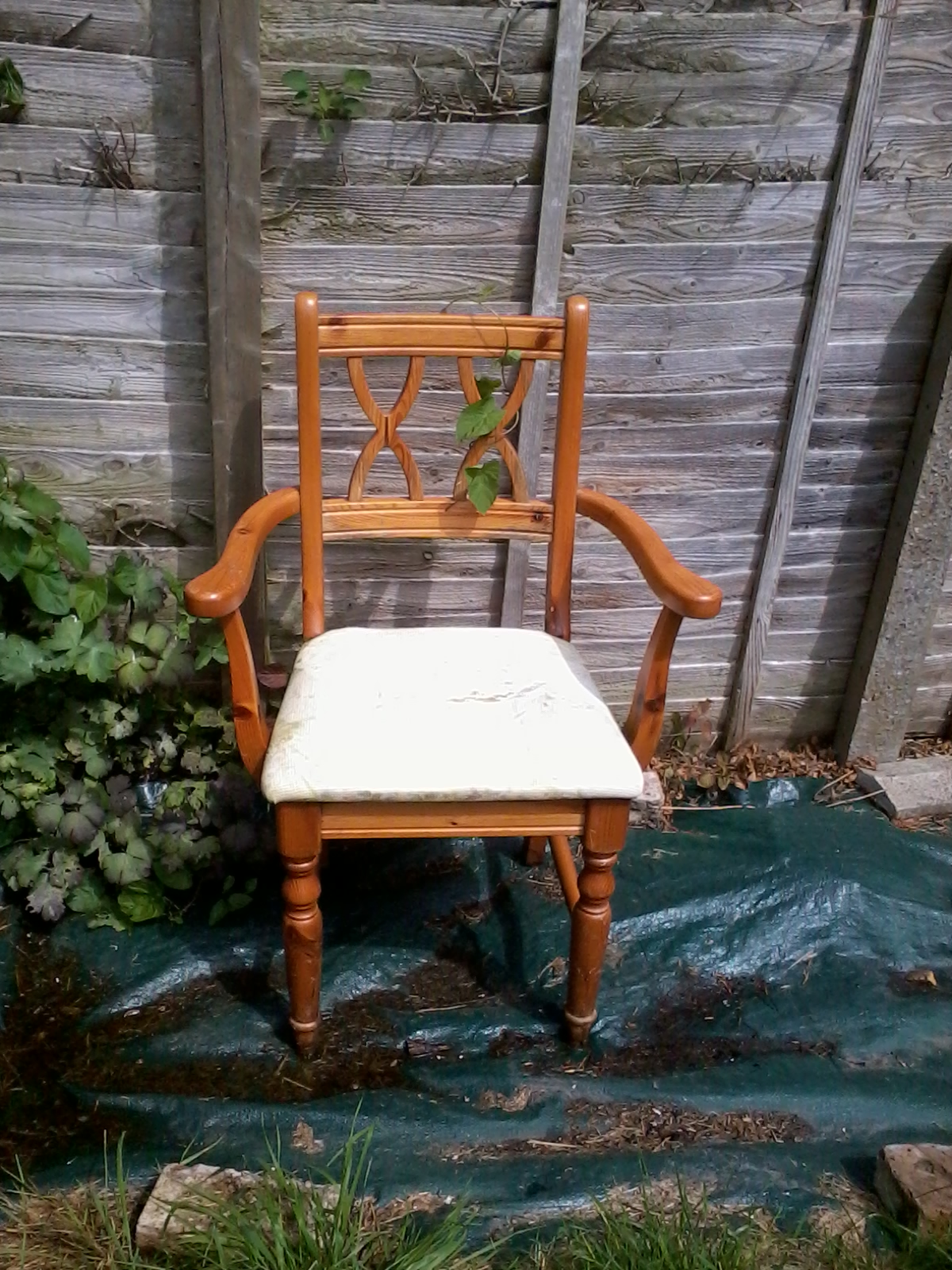
About a year ago I placed my late granny’s chair in the garden with the idea that it would be my meditation spot on sunny dry days. It has sat there ever since, the cushion slowly eroding despite covering it with carrier bags, the wood becoming characterful and mottled. The other day I saw a bird pecking at the wasted carrier bags and this inspired me to take action. Responding to the moment rather than doing a to-do list objective.

I dusted it down, removed the carrier bags, sponged down the cushion, removed all bird poo, let it dry off and then sat with a cup of tea feeling all aglow from having remembered a long forgotten plan without the help of the all pervading and rather stress inducing to-do list!

Today’s total practice time: 40 minutes movement and seated practice

2015-06-18 11.29.18

My fair weather meditation spot!

Snow day

2015-01-30 09.05.53

We had a snow day the other week. It was a perfect flurry that made everything look picture perfect and yet it didn’t totally disrupt the trains and roads, so win-win all round.

On the eight week mindfulness courses I teach there is much reference from week one of the beginner’s mind. Participants are asked to eat a raisin as though they have never seen one before and then this continues in their home practice by doing a daily task with the spotlight of their full attention.

If ever there is something that reconnects us with beginner’s mind it must surely be walking to school with two kids after a snow flurry. The same old tired journey we do everyday was suddenly magical and exciting to them. The alley we traverse (often much covered in dog poo) was transformed into a Narnia-esque secret snow tunnel.

There were oooohs, there were arrghs, there were a few soggy tumbles as well but with the help of kindly curiosity I found myself quelling the urge to say ‘come on’ (surely the most overused two words on the school run?) and instead just marveled at their marveling. At moments like that I find myself thinking, ‘this moment, must remember this moment.’

It seems to me children are naturally mindful and we (society, parents, teachers, life, soft cops) squash it out of them, telling them to hurry and multi-task so we can squeeze all the things that need to be done into one day.

How wonderful it was to just take our time, marvel at the beauty of winter and, for one day at least, give ourselves permission not to rush.

Today’s total practice time: 30 minutes with the kids (it is half term)

?????

The rush hour

I read somewhere recently that 40-somethings are often in the rush hour of their lives. The article said this is when career and child rearing responsibilities reach their pinnacles leaving those in their forties with very little free-time outside of work and child-rearing. The moniker Dual Earners, Toddler Twins (DEETs) rings very true for me and my partner.

It feels as though we have had toddler ‘twins’ for decades, though of course it has only been six years. And by definition neither of them are officially toddlers anymore nor twins. But having two young kids while trying to have a career is trying and frequently tests my mindfulness practice, let alone trying to carve out a new career for yourself at the same time.

Add to this mix the never ending story of retraining, which so many of us undertake in our thirties and forties because we realise we want something different or need something that fits round the kids, and you have levels of busy-ness unknown to our parents generation.

When my parents were in their forties they weren’t schlepping off onto training courses and retreats. You decided what you wanted to do at 18 and pretty much stuck with it. There are of course pros and cons to this model but in their forties I think they were certainly relaxing, watching TV and going down the pub more than I ever do!

I realised the other day, as I got in from London and had half an hour before needing to pick the kids up, that what I thought I should do was turn the computer on and catch up with emails and then head back out into the world even more frazzled than when I arrived. But I paused and guess what? A different idea came to mind.  How about leaving the computer off, putting the kettle on and allowing myself half an hour with the paper before getting the kids?

Deep down we know that’s what our parent’s generation would have done with a spare half hour, rather than thinking their blog that has 3 readers desperately needs to be updated, on which note I down tools for lunch!

Today’s total practice time: 35 minutes (20 minutes qigong and 15 minutes self-compassion meditation)

Kids – a useful mindfulness tool!

2015-01-16 14.08.01

It’s often when we need it least that illness can strike. Although saying that is there ever a good time to be ill? All week I have been catching up with my work – both from my day job and from my mindfulness teaching work that I do. Blog posts, emails, advertising, lesson planning, proof reading my new mindfulness booklet, burning CDs and labelling them – it all takes up time.

And last week I was unable to do any of these day to day tasks as I was on retreat in Lockerbie, although at times I blinked and found myself remembering Tibet and my travels there. It was a wonderful, nourishing retreat and also very hard work. And of course this week has been all about playing catch up.

My oldest has had a hacking cough all week and I have insisted she trudge in to school every chilly day so that I can get my work done. She was fine and she didn’t need a whole week off but today she looked at me and just said ‘mummy, I think I need to rest my voice’.

As a teacher I know that feeling only too well so I relented and said OK you can have today off. This caused a meltdown in my youngest who on twigging that the oldest was having a day off decided he too was so ill school was not option.

As I almost dragged him bodily into school, a forced smile on my face, and the oldest ‘ill’ one kept skipping with delight (in between hacking coughs) at the idea of having a whole mummy day at home, I recalled, or perhaps it was somewhat later, what Jon Kabat-Zinn says about kids.

Let your children be your own zen master, he advises. That way whatever they throw at you, you can take a deep breath and tell yourself this is all part of the practice!

Total Practice Time: So far today ZERO, but the intention is there!

Camping: the ultimate habit buster

Glamping fire

Last year for my family holiday I went glamping, in a beautiful bell tent with the hubby and kids (then 3&5 so you can imagine there was nothing remotely glamorous about it). It was lovely and testing and different all at once.

Holidays are what get us away from our routine, from the nine to five grind of school runs, doing homework with reluctant jiggling young children and commuting into London. To stand back, take stock and have a rest is so welcome even though with young kids there is no rest, only a change of location in which you perform the never ending round of get up, entertain, cook , cajole to eat veggies, clean teeth and then usher bedwards.

It was hard work being in a tent, losing my space to practice any form of meditation or yoga and then when the children finally did go to sleep it was usually only half an hour later before it got dark.

Talking to someone recently about camping they said ‘It’s the ultimate habit buster, you have to change the way you think and change the way you do everything, from going to the loo in the night to washing the dishes, nothing is how you usually do things when you camp.’ That is so true.  The practice was just being there, watching the flames flicker each night by the fire as we had a medicinal glass of wine and talked briefly before crashing out to face another 5am wake up call from our youngest and most excitable child.

This year’s holiday was more civilised – a farm house with my extended family. I had space and time to do Qi Gong everyday and meditate as much as I wanted. It was bliss compared to glamping but I wouldn’t completely rule camping out in the future because there are very few experiences that get you right back to basics, it just might be more rewarding once my son has stopped waking up at 5am.

And for those of us who go away only once or twice a year there are so many ways to shake things up in our daily lives in between holidays, from changing where we sit to watching a random film we know nothing about, little and regular changes to our daily routine can help us recognise and even change our sometimes unhelpful habitual behaviour.

Today’s total practice time: 20 minutes

Learning to dance again

In week seven of an eight week mindfulness meditation course we explore the exhaustion funnel. When teaching this class I quote from This Frantic World which says in some countries doctors don’t ask ‘when did you start to to feel depressed’. Instead they ask ‘when did you stop dancing?’. I have yet to find out which country it is that has such enlightened doctors but I am tickled by the idea that perhaps in some utopia there may be salsa on the NHS!

This is a preamble to say that dropping the things that nourish us can cause us more stress than hoped. A person may drop all sorts of ‘optional’ pastimes in the name of clearing the decks or making more time. But they then may wake up a few years later burned out and with little joy in their life. Hence the question is really when did you stop doing the things you loved and start only focusing on work/children/caring responsibilities/obsessive house renovations (delete where applicable).

The good news is that none of this is irreversible. As Jon Kabat-Zinn frequently says there is always more right with you than wrong with you. Reclaiming your life is a big part of week seven and a big part of living mindfully. Being able to ask yourself, ‘what is the best thing I can do for myself right now?’ and perhaps deciding it’s a cup of tea rather than whittling away at your seemingly endless to do list.

Today’s Total Practice Time: 30 minutes